


Exosome Therapy: The Next Frontier in Skin Regeneration
In short: Exosomes are tiny messenger particles released by cells, packed with proteins and growth signals that tell skin cells to repair and renew. In aesthetic medicine, exosome therapy uses these messengers, usually applied after microneedling, to accelerate regeneration, calm inflammation and improve skin quality. Early clinical research shows promising gains in hydration, elasticity and texture, especially when a medical team delivers the treatment.
Few treatments in aesthetic medicine have generated as much excitement in recent years as exosome therapy. Once confined to laboratories studying wound healing and tissue repair, exosomes have now moved into the clinic, where they support some of the most advanced skin regeneration protocols available. The appeal is easy to understand: instead of filling or freezing, exosomes work by instructing your skin to repair itself.
At MD Aesthetics in Mallorca, we use exosome therapy as part of our regenerative approach to skin quality. In this guide we explain what exosomes actually are, how they work, what the research says, and why they pair so well with treatments such as microneedling, particularly after a long Mediterranean summer has taken its toll on your skin.
What Are Exosomes?
Exosomes are microscopic vesicles, tiny bubbles measuring roughly 30 to 150 nanometres, that almost every cell in the body releases as a way of communicating with its neighbours. Each one carries a cargo of proteins, lipids, growth factors and genetic material. When a nearby cell absorbs an exosome, it reads these instructions and adjusts its behaviour, for example by producing more collagen, calming inflammation or speeding up repair.
The exosomes used in aesthetic medicine typically come from stem cell or plant cell cultures, purified and concentrated into stable preparations. Researchers see them as a way to capture the regenerative power of stem cells without transplanting living cells: as a review in Nature Reviews Bioengineering explains, stem cell-derived exosomes can offer similar clinical benefits to stem cell therapy while avoiding the biosafety concerns that come with transplanting living cells.
How Exosome Therapy Works for the Skin
Ageing skin does not just lose collagen; it gradually loses the ability to organise its own repair. Fibroblasts become sluggish, cell turnover slows and chronic low-grade inflammation chips away at skin quality year after year. Exosome therapy targets this communication problem directly.
During treatment, we apply a concentrated exosome preparation to skin primed to absorb it, most often immediately after microneedling. Billions of vesicles then deliver their regenerative signals to fibroblasts and keratinocytes, encouraging fresh collagen and elastin production, faster cell renewal and a calmer, more balanced skin environment.
What Can Exosome Therapy Improve?
Clinical research on exosome-based skin treatments is young but growing quickly. A 2026 systematic review of human studies published in Cureus found consistent short-term improvements across several measures of skin quality, including:
Hydration and elasticity, with skin feeling bouncier and better moisturised
Fine lines and wrinkle depth, particularly in delicate areas such as around the eyes
Texture and pore refinement, for a smoother, more even surface
Pigmentation and redness, including calmer skin after intensive treatments
The same review notes that most regulated studies reported only mild, temporary reactions such as redness and light swelling. Its authors also stress that the field still needs larger randomised trials, which is why we present exosome therapy for what it is: a promising, well-tolerated regenerative treatment rather than a miracle cure.
Exosomes and Microneedling: A Natural Pairing
On intact skin, exosomes struggle to get past the outer barrier. Microneedling solves this problem elegantly: the thousands of microchannels it creates allow the exosome solution to reach the deeper layers where fibroblasts live, exactly where regenerative signals matter most.
The pairing benefits both treatments. Microneedling triggers a controlled repair response, and exosomes amplify and direct it, which can mean faster recovery, less post-treatment redness and stronger collagen results over time. If you are new to collagen induction therapy, our guide to microneedling in Mallorca explains how it works in detail.
Why Late Summer in Mallorca Is the Perfect Timing
Months of sun, salt water, heat and long social evenings leave their mark on the skin. By the end of a Mallorca summer, many of our patients notice dullness, dehydration lines, enlarged pores and stubborn pigmentation. Autumn, with its softer light and lower UV levels, is the ideal season for regenerative treatments.
Exosome therapy fits this moment perfectly. It helps repair summer damage at a cellular level while preparing the skin for microneedling courses or other treatments through the cooler months. Consistent SPF remains essential, of course: no regenerative treatment can outpace unprotected sun exposure.
Exosome Therapy at MD Aesthetics
Consultation first
Every exosome treatment begins with a medical consultation. We assess your skin, discuss your goals and design a protocol around them, whether that means a single glow-boosting session before an event or a full course combined with microneedling for deeper regeneration.
The treatment
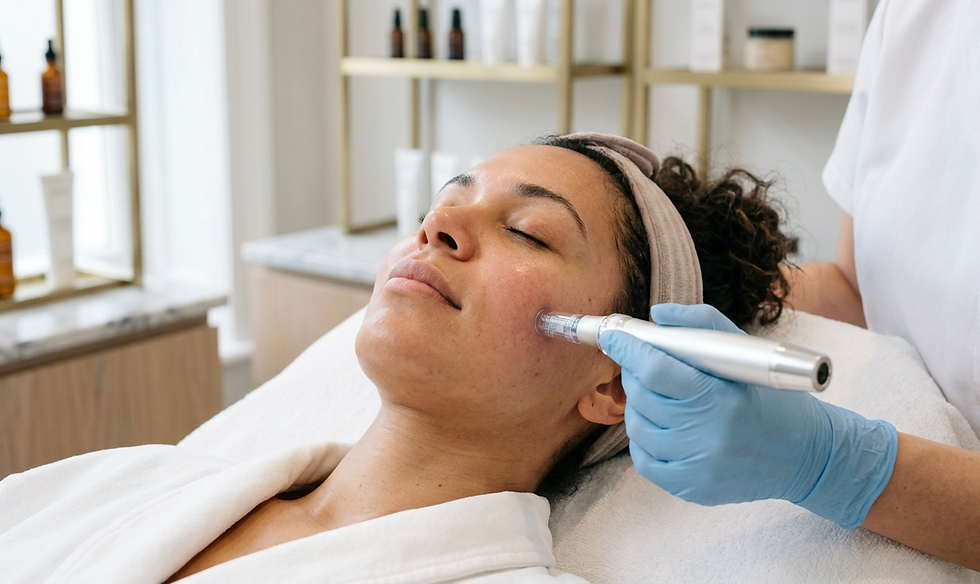
A session typically takes 45 to 60 minutes. After cleansing and, where appropriate, a numbing cream, we perform microneedling and immediately apply the exosome preparation so it penetrates through the fresh microchannels. Most patients find the experience comfortable and describe only mild warmth or tingling.
Aftercare
Expect some redness for 24 to 48 hours, similar to a light sunburn. We advise skipping make-up for the first day, avoiding intense exercise and heat, and staying strict with sun protection, especially under the Mallorca sun. Skin quality then improves progressively over the following weeks as collagen remodelling gets under way.
Is Exosome Therapy Right for You?
Exosome therapy suits most adults who want to improve skin quality, texture and radiance, and it works well for all skin types. We generally advise postponing treatment if you are:
Pregnant or breastfeeding
Experiencing an active infection, acne flare or inflammation in the treatment area
Living with certain autoimmune conditions or taking immunosuppressive medication
Prone to keloid or hypertrophic scarring (we discuss this case by case)
Your medical consultation covers all of this, so you can go ahead with confidence and realistic expectations.
Choosing Where to Have Exosome Therapy
Exosome products vary enormously in quality, concentration and safety, and the field is still young. The systematic review cited above documented serious complications, including persistent inflammation and scarring, in people who received unregulated exosome injections outside medical settings. The lesson is clear: choose a medical clinic, a traceable and reputable product, and a qualified practitioner. At MD Aesthetics, our medical team uses established, quality-controlled exosome preparations, applied topically in combination with microneedling and following strict safety protocols.
Discover Exosome Therapy at MD Aesthetics
If your skin feels tired, dull or less resilient than it used to be, exosome therapy offers a modern answer: a treatment that teaches your skin to repair itself. At MD Aesthetics in Mallorca, our medical team will build a regeneration plan tailored to your skin, your goals and your calendar.
Get in touch today to book your consultation and give your skin the reset it deserves after the summer.


Comments